Vitalik Buter2026-10-04 01:35:12Vitalik tests local-model orchestration for remote AI with a three-layer privacy setupVitalik Buterin said he is running a personal experiment that uses health and travel data to generate diet and exercise recommendations while trying not to expose private information to frontier AI models. In the setup he described, a local model, Qwen 3.8 Flash Next, acts as the orchestrator, while remote large language models are used as tools to make up for weaker reasoning and knowledge on the local side. The privacy design has three layers: the local model rewrites queries to reduce identity and writing-style leakage, zkAPI is used so payment rails do not reveal identity, and Tor is used to hide network metadata and IP addresses. Buterin said he has already received recommendations and that remote models improved the output. He also pointed to several shortcomings in the current design, including Tor being a poor fit for linking requests, privacy that may still fall short, latency running 10x to 100x above what it should be, suboptimal skill-file strategy, local-model throughput of roughly 20 to 30 TPS, and a trade-off where giving remote models less data also reduces how much they can help.20
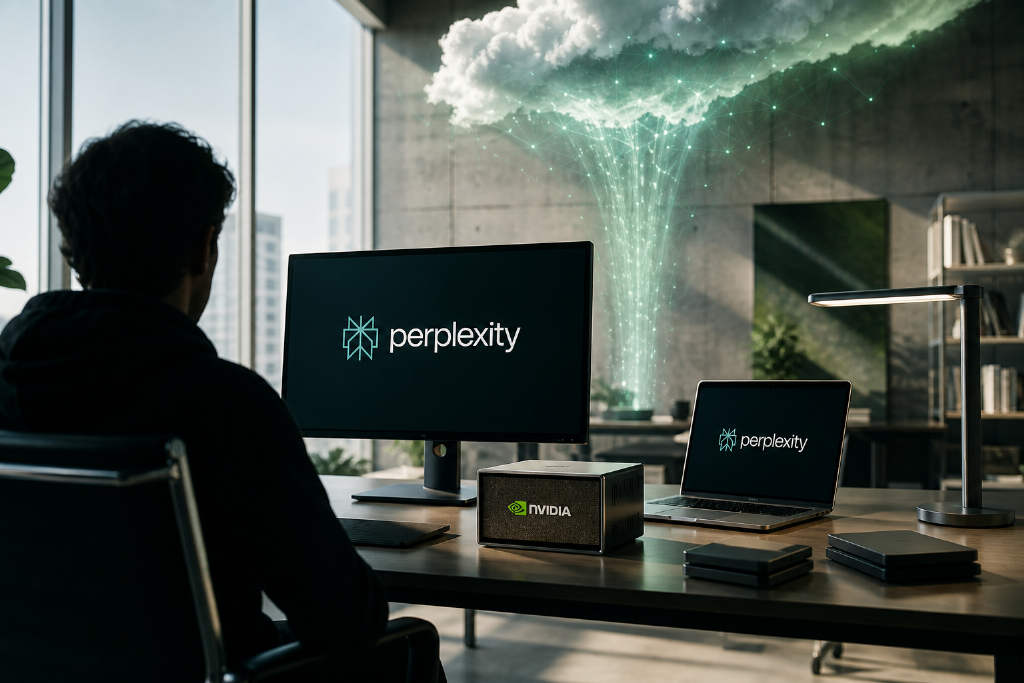
Perplexity2026-08-26 11:07:40Perplexity launches Portable Computer, but local model access still requires a subscriptionPerplexity has introduced Portable Computer, a product that moves its full Computer Agent stack onto a user’s own machine. According to the update, model execution, planning, tool use, task queues, and file search can all run locally, which means those local tasks no longer consume Perplexity credits. The initial release supports NVIDIA DGX Spark and can run Qwen 3.8 27B as well as PPLX 27B, a model post-trained by Perplexity. When a task needs web search, browser control, or stronger reasoning, the system can call on more than 15 frontier cloud models, but only with user approval. Even so, Portable Computer is currently available only to Pro and Max subscribers. The launch has already drawn pushback from some community members, who questioned why they still need to pay a monthly Perplexity fee if they are using their own hardware and compute to run models locally.1030